Yes. Sunbeds expose your skin to artificial ultraviolet radiation, increase skin cancer risk and speed up skin ageing. Tanning with UV is not a safe habit, even when you do not burn. A base tan, a short session or sunscreen does not make a sunbed safe. If you want a different skin colour, self-tan is an option without artificial UV; keep protecting your skin outdoors.
You might go for warmth, a relaxing break or a little colour before a holiday. Those wishes are understandable. The useful step is to separate them from UV exposure. Here is what the radiation does, why common reassurances fall short and how to choose a different routine.
What a sunbed does to your skin
Sunbeds use UV lamps. The American Academy of Dermatology (AAD) explains that these emit mainly UVA, although the balance varies between devices. UVA contributes to skin ageing, while UVB is the main cause of sunburn. Both can contribute to skin cancer. A device that causes little redness is therefore not necessarily a gentler choice.
The World Health Organization (WHO) advises against artificial tanning. Its cancer agency, IARC, classified UV-emitting tanning devices as carcinogenic to humans in 2009. That classification means the exposure can cause cancer; it does not predict whether a particular customer will develop it. Advice from a salon or a modern-looking machine does not change that.

Sources for this section
No sunburn does not mean no skin damage
Sunburn is noticeable: skin becomes tender, red or darker, and may hurt. UV damage is not always as visible. The AAD describes tanning itself as a response to skin injury. Your reflection, the absence of pain or the speed at which colour develops cannot tell you that a dose was safe.
Exposure over the years matters too. Artificial tanning can contribute to earlier wrinkles, dark spots and loss of firmness. The hands in the photograph show ordinary skin lines; a picture cannot establish what caused someone's skin to change. Our guide to premature skin ageing explains more about natural changes and the effects of the sun.

Your own risk depends partly on your skin, your history and your UV exposure. Research percentages describing groups are not a personal probability. The general advice still stands: avoid sunbeds. If you used to tan regularly, there is no need to blame yourself. Limiting further exposure remains worthwhile.
Sources for this section
A base tan and SPF do not make a session safe
A base tan will not stop you getting sunburnt on holiday. Tanning before you travel adds another UV exposure before the trip has even started. Prepare with clothing, a hat, shade and enough sunscreen for exposed areas instead. You do not need to build up colour before going outdoors.
Do not use sunscreen as permission to use a sunbed or stay on it longer. WHO advises limiting UV exposure; protection is not a way to extend tanning time. For the broader role of sunscreen, read how sun protection helps prevent skin cancer. That guide covers everyday outdoor protection, not a safe sunbed routine.
A sunbed is not a recommended way to get vitamin D
UVB plays a part in vitamin D production in the skin. That does not make a sunbed a sensible source. WHO specifically advises against artificial tanning for this purpose, and sunbed lamps mainly emit UVA. Do not book a session as a self-prescribed treatment for a possible deficiency.
If you are concerned, ask your doctor whether changes to your diet or a supplement would be appropriate. This is especially useful if you spend little time outdoors or have already received advice about vitamin D. Supplement advice depends on your circumstances; there is no need to experiment with a UV schedule, dose or tanning course.
Sources for this section
If you want colour, choose an option without UV
A self-tanning product can give skin a tanned appearance without a sunbed. Follow its label and choose a shade you like. The colour itself does not protect you from the sun. Plan the same outdoor protection you would use without self-tan.
The bottles in the photograph simply illustrate a skincare choice; their contents cannot be seen. You do not have to change your natural skin colour at all. Choosing no tanning product is also an option before a party or a holiday.

Make stopping practical, without guilt
Start with why you go. If you want to unwind after work, schedule a walk or another relaxing break for that same time. If it is about colour, decide beforehand whether self-tan suits you. A specific alternative to the regular visit may be easier than making the decision again every week.
Avoid automatically keeping the next appointment, and consider telling someone supportive about your choice. These are practical examples, not a proven cessation programme. If stopping feels very difficult or you become restless without tanning, ask your doctor for help. The AAD recognises that indoor tanning can become addictive for some people; seeking support is appropriate.
Enjoy being outdoors with less unprotected UV
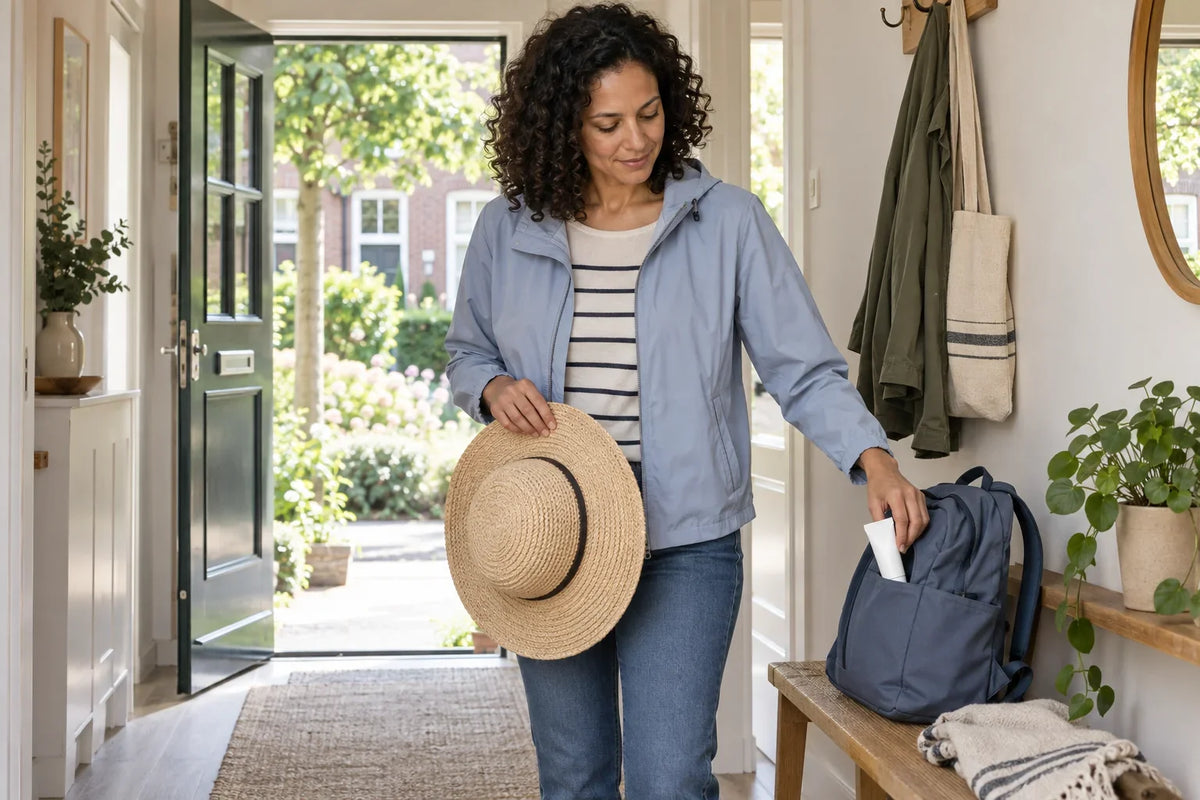
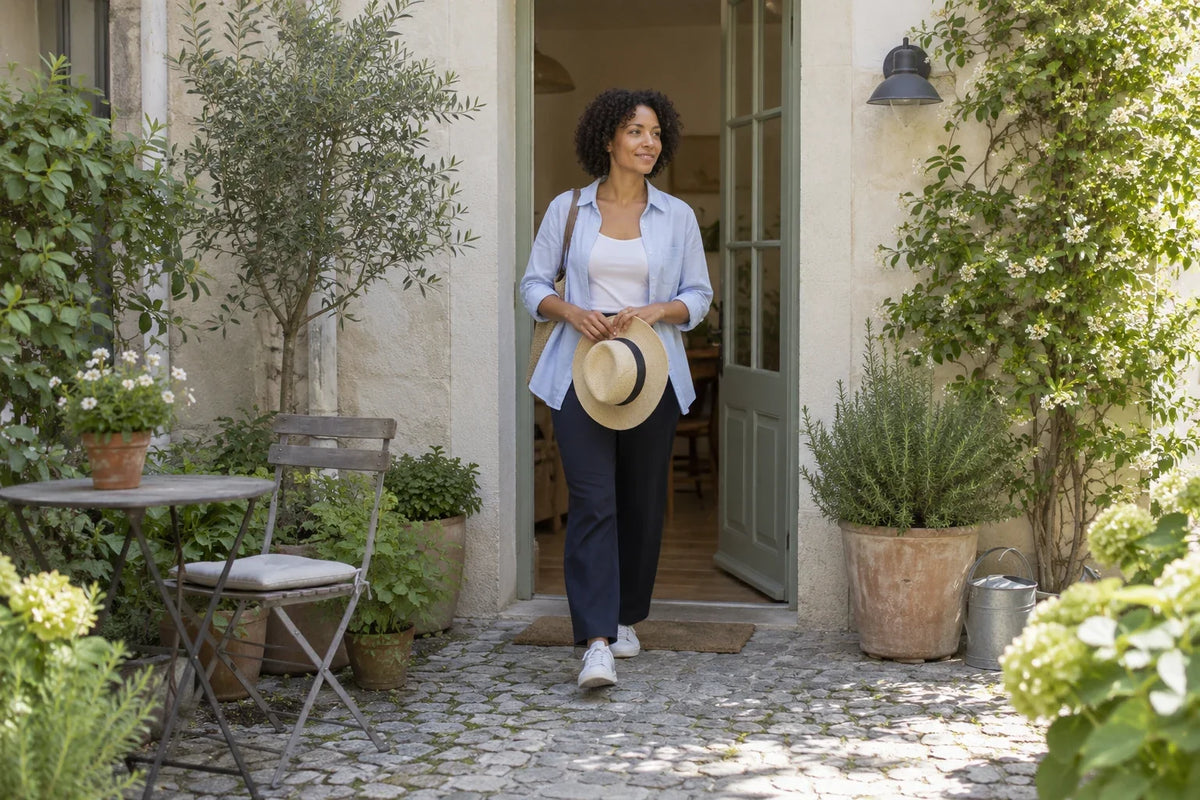
Giving up sunbeds does not mean staying indoors. Build protection into things you already do: getting dressed, packing a bag and choosing where to have lunch. The local UV index helps you plan time outside; it is not a sunbed safety meter.
Start with what you cover
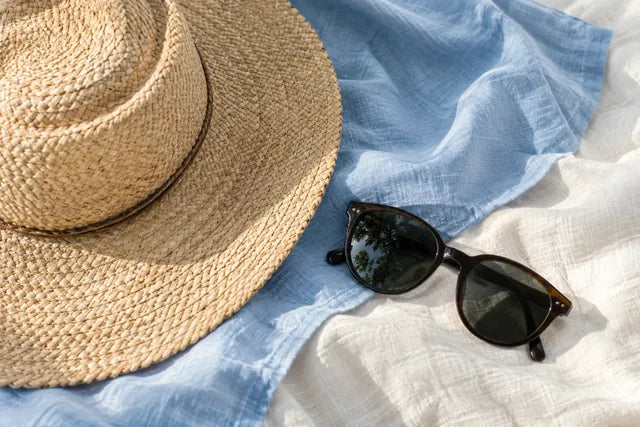
Choose protective clothing, a broad-brimmed hat and sunglasses with UV protection. A shirt shown in a photograph has no measured protection factor. If you want a stated level of protection from clothing, look for a UPF label.

Move your break into the shade
A bench beneath a tree or a sheltered lunch spot helps reduce direct exposure. Still think about exposed skin; shade is one part of the approach. A relaxing outdoor break does not need to revolve around getting a tan.

Apply sunscreen to exposed areas
Use sunscreen with UVA and UVB protection and SPF 30 or higher. Apply enough to all exposed skin, including your ears and neck. Outdoors, reapply about every two hours, and after swimming, heavy sweating or towel drying as directed on the label. Good sun protection helps prevent skin cancer, sunburn and premature skin ageing; combine sunscreen with clothing and shade.

Sources for this section
Have a changing skin spot checked
If you notice a new or suspicious spot, or something that changes, itches or bleeds, make an appointment with your doctor. Mention previous sunbed use and other UV exposure. An online photograph or a cream you choose yourself cannot replace an assessment.

Sources for this section
Soluveli is developing facial sunscreen. Visit the homepage to follow its development and sign up for one launch notification. There are no tested product results or fixed launch date to promise here. For today, the practical step is simple: avoid artificial tanning and protect your skin during everyday outdoor activities.