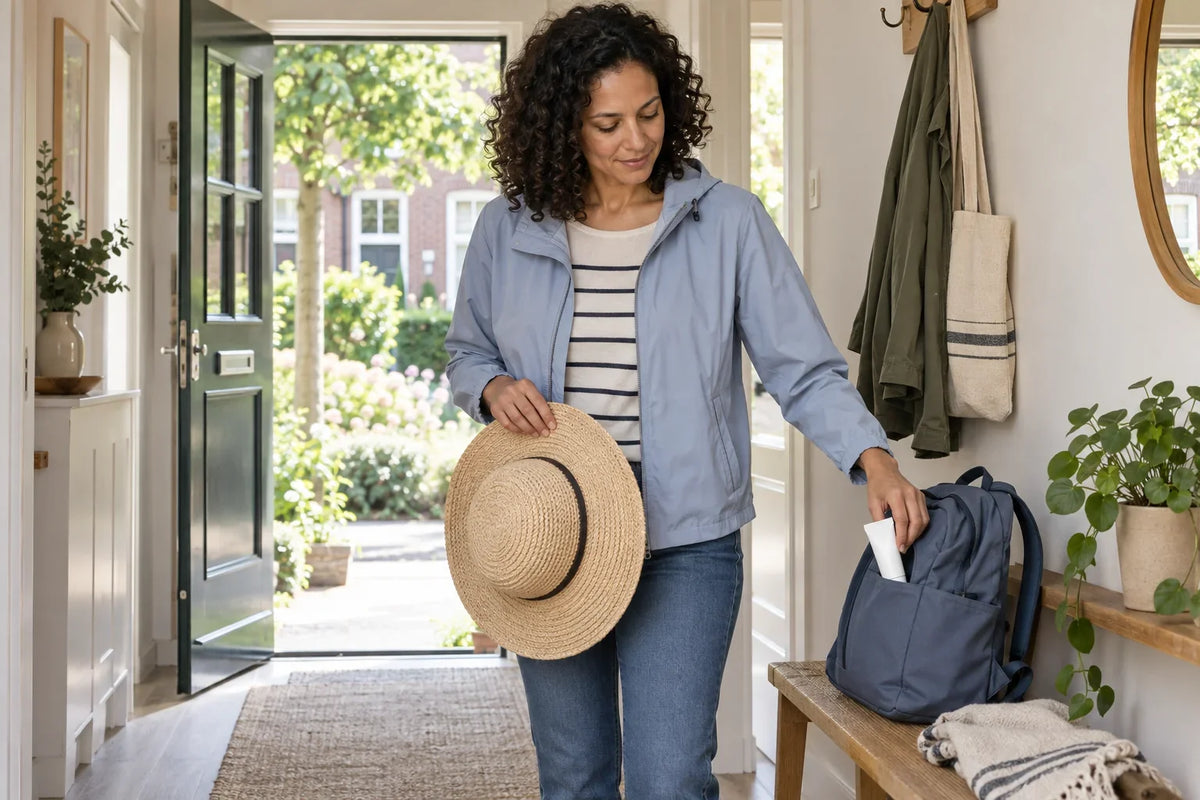
Sun protection is recommended from UV index 3: seek shade, cover up and use at least SPF 30 with UVA protection on exposed skin. Check the local UV forecast for the hours you will actually spend outside. Today's highest number does not automatically describe the sunlight during your early commute or evening walk.
From 3: make protection part of your plan
The UV index describes the strength of ultraviolet radiation. You cannot judge it by how warm the air feels. As the index rises, skin and eyes can be damaged more quickly. Sunscreen, used with clothing and shade, helps prevent sunburn, skin cancer and premature skin ageing.
Use the index as a starting point for a practical decision. The WHO's international guidance groups the actions as follows:
- 0–2: UV exposure is low. An ordinary short trip outside usually needs fewer precautions, but the number is not a personal guarantee of unlimited safe time.
- 3–7: plan protection for your time outdoors. Seek shade around midday, cover up and apply sunscreen to skin left exposed.
- 8 and above: avoid being outside around midday where possible. Move a long walk or workout to a time with lower UV levels and use the full combination of protection.
Follow any individual medical advice about sun sensitivity. Long periods outside, snow and altitude also need extra attention. The index does not replace those considerations. For the basics of a daily routine, read why sunscreen matters for your face.
How to read the UV forecast
Look up your location with the local weather service or use the SunSmart Global UV app described by the WHO. Check the date and update time. Then establish whether you are looking at the current value, an hourly forecast or the expected daily maximum. Each answers a different question.
A single number beside today's weather is often the daily maximum: the highest UV index expected that day. The peak is around solar noon, when the sun is highest in the sky. That does not always mean 12 o'clock. Location and daylight saving time affect the clock time, so use local guidance when travelling.
For example: the forecast shows a maximum of 6 and you leave early for work. That does not mean the index is already 6 when you set off. Equally, a low morning value tells you little about your lunch break. Check both periods if an hourly forecast is available. If it is not, pack protection for the middle of the day.

Three outdoor moments, three useful choices
Cycling to work
You leave early and come home later. Check both journeys while packing your bag. If protection is needed, apply sunscreen before leaving, following the product directions. Put the tube in the bag you are taking so you can reassess before the journey home.
A lunchtime walk
A morning indoors does not make the afternoon sun weaker. Check the forecast before heading out and choose a shaded route where possible. Include your face, ears and neck when applying sunscreen. Our guide to how much sunscreen to use on your face, neck and ears helps you cover the easily missed edges.
A longer workout
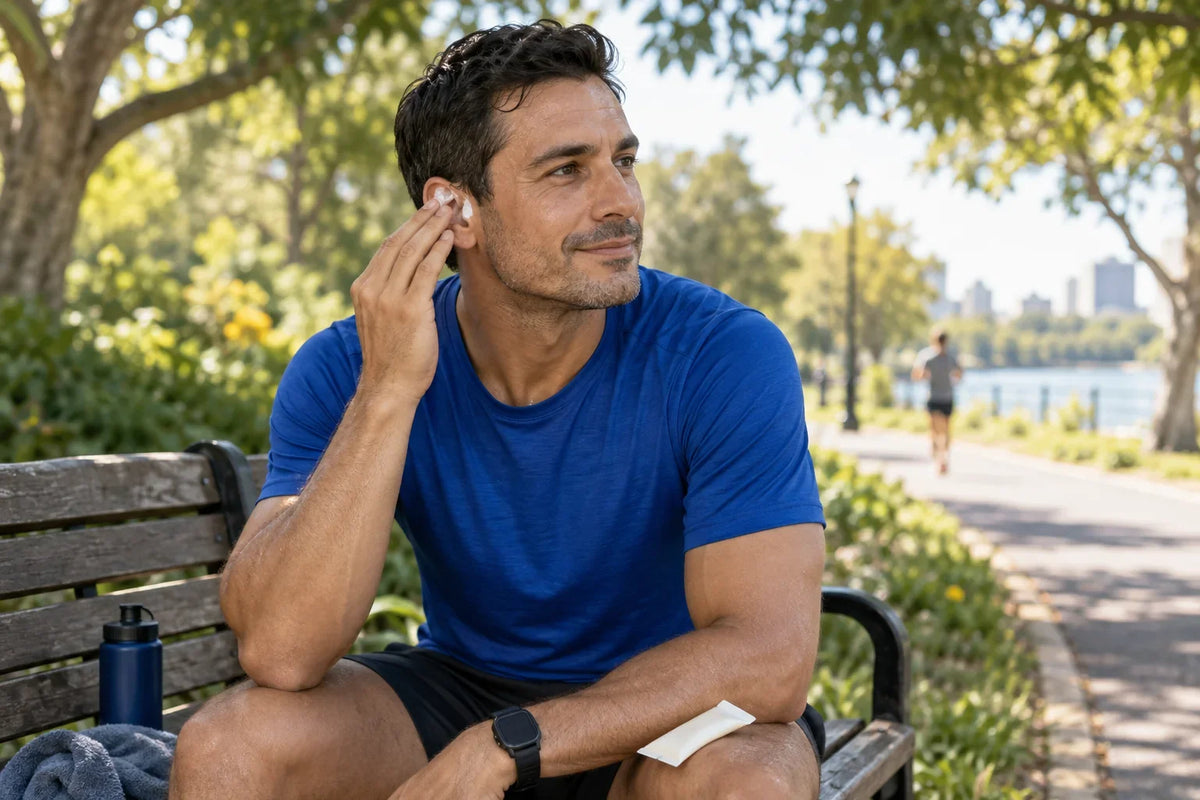
Look at the expected index throughout your session. If possible, train earlier or later when UV levels are lower. Choose water-resistant sunscreen, take it with you and plan a break to reapply. Read what water and sweat resistance mean during sport: sweating, swimming and towel drying affect the layer on your skin.


Clouds and temperature are not UV meters
A cool breeze tells you nothing about UV strength. Clouds can reduce radiation, but an overcast sky does not switch it off. You may need protection on a cool day, even when you reach for a jacket. Base your decision on the forecast, not on how warm your face feels.

The season matters because the sun's position changes. Yet a month on the calendar is not a complete rule. Your location, holiday destination, altitude and time outside change the situation. Checking the local index is more useful than applying the same summer or winter rule everywhere.
Make protection easy before leaving
Keep a sunscreen you enjoy using with your everyday essentials. Apply enough to exposed skin and follow the packaging. Outdoors, reapply about every two hours and after swimming or sweating, as directed. Remember the back of your neck if clothing does not cover it.


A hat, clothing and shade belong in the same plan. A higher SPF is not a reason to stay longer in the strongest sun. A comfortable routine starts with a product you are happy to apply generously.
Soluveli is still in development, with a focus on facial sunscreen that fits comfortably into daily life. Read about our ambitions on the homepage and sign up for one email when we launch.
Sources and further reading
4 sources
- WHO — understanding the UV indexdaily maximum, local timing and protection thresholds.
- KNMI — UV explainedsun position, season, clouds and temperature.
- RIVM — sun protection guidance for the Netherlandsclothing, shade and SPF 30 with UVA protection.
- American Academy of Dermatology — sunscreen FAQsprevention of skin damage and reapplication.