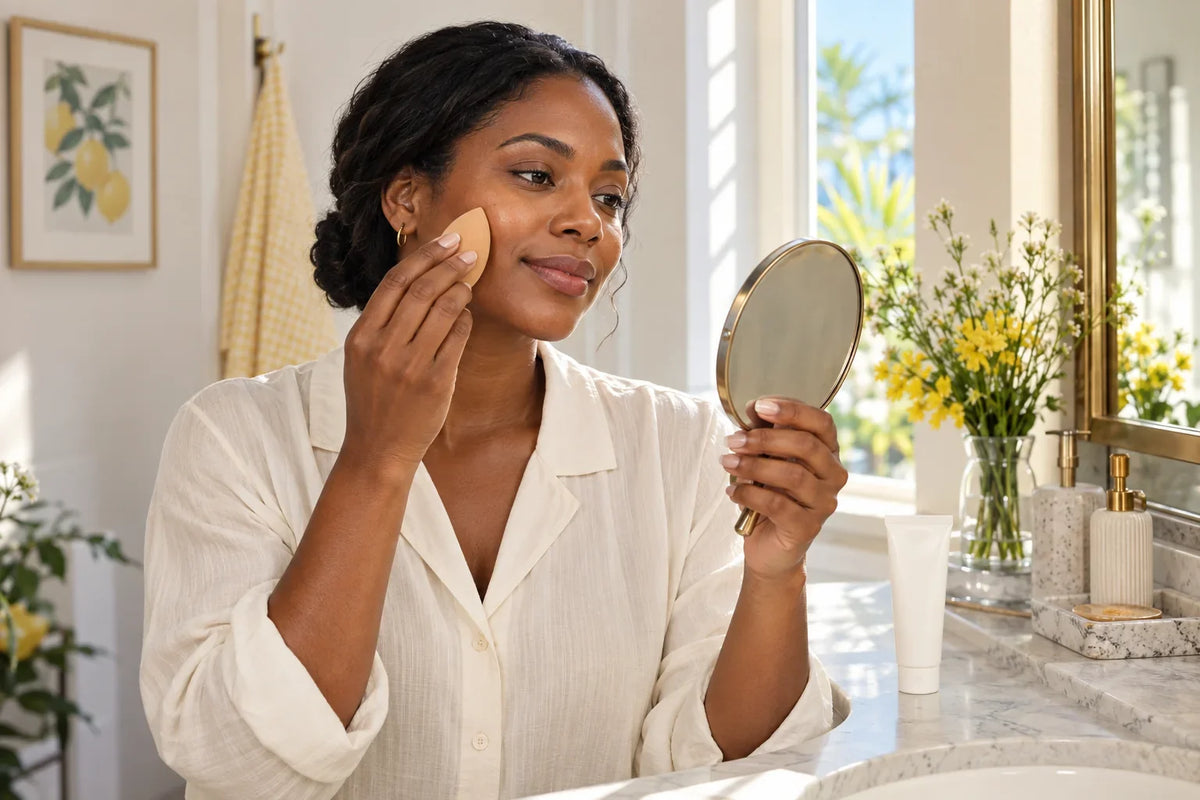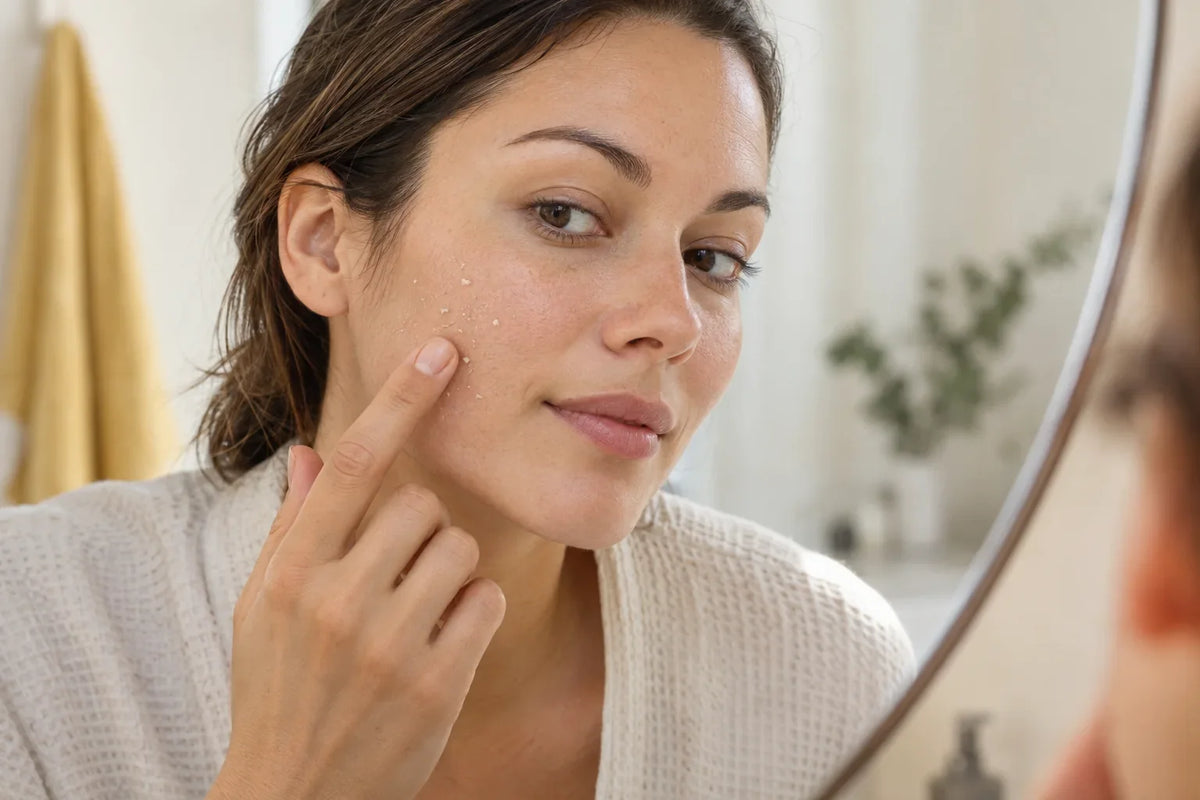
You apply sunscreen and suddenly little white rolls or crumbs appear on your skin. This is called pilling. It often shows up while spreading sunscreen or as you put makeup on top. Fewer extra layers and a gentler touch are a good place to start. Here is how to find the step causing the problem.
Try this first
- First notice when pilling starts: with skincare, sunscreen or makeup.
- Simplify unnecessary layers beneath sunscreen.
- Spread gently and avoid repeatedly rubbing the same spot hard.
- Keep using the recommended sunscreen amount. A smooth but overly thin layer is not a solution.
How to recognise pilling
Small, soft crumbs appear where you rub. They may be white, or beige from foundation. Sometimes there are just a few bits along your jaw; sometimes a larger part of the product layer rolls away. It spoils the makeup finish and makes sunscreen harder to spread evenly.
You are not necessarily removing dead skin. Skincare products themselves can ball up. If flakes are visible before you apply anything, dry or irritated skin may also be involved. That calls for a different approach from a cream that only starts pilling as you rub it in.

Why does sunscreen pill?
A 2024 study of 528 women in Guangzhou found associations between pilling, skin characteristics and application technique. Rubbing produced relatively frequent pilling in the tested routine. The study had cosmetics-industry connections and concerned selected products and conditions.
Look at both your product combination and the way you apply it. Blaming one ingredient every time gets you only so far. Building your routine slowly makes it easier to spot the step where pilling starts.
Find the step causing trouble
Start when you have time to experiment calmly. Keep cleansing and necessary skincare unchanged. For example, omit just one extra serum or primer first. Avoid changing five things at once, so you can see more clearly which step makes a difference.
Apply the recommended amount of sunscreen and let it settle. Add make-up with gentle movements. If it still pills, try a different combination another day. Change one product at a time so you can tell what makes a difference.
Do not stop prescribed skin medication on your own to obtain a smoother finish. Discuss problems with your clinician. Burning, a rash or persistent irritation calls for a different approach, not continued experiments with more cosmetics.


An example: going from four products to two
Suppose you use a serum, moisturiser, sunscreen and primer. Pilling starts when you apply foundation. Next time, leave out the primer and keep everything else the same. If that works, you already have a practical solution without buying a new set of products.
If it still happens, try another day without the extra serum. You are looking for a combination that feels good, not the greatest number of steps. Keep the skincare your skin needs and do not change prescribed skin medication for a smoother makeup finish.
Repeatedly touching your cheek or rubbing a partly dry layer can make the problem harder to judge. Spread gently, leave the product alone and then assess the next step. A photo or short note about your routine helps you remember which combination worked.
What if it has already pilled?
Do not keep scrubbing or roll sunscreen off like an exfoliator. If needed, gently remove the disturbed layer, let your skin settle and apply enough sunscreen evenly again before returning to the sun. Use shade and covering clothing too.
Dry skin and product pilling can occur together. Flaking therefore does not always mean the same thing as pilling. If you cannot tell them apart or have symptoms, seek advice rather than using increasingly strong exfoliation.


Three common questions about pilling
Does sunscreen still work after pilling?
The crumbs cannot tell you the remaining SPF. If the layer is visibly coming away or leaving bare patches, apply an even layer again. Simply brushing off the loose bits does not establish that protection is still even.
Should you exfoliate first?
Do not start scrubbing to fix product rolls. Harsh rubbing can irritate skin and remove more of the layer. A gentler routine with fewer optional products is a more useful first step.
Are silicones always to blame?
No. An ingredient list cannot tell you how two complete formulas will behave together on your skin. Test the combination and your application technique rather than ruling out an entire ingredient group.
When should you try a different sunscreen?
Skincare, sunscreen, then makeup is the AAD’s suggested order. See our routine guide and amounts for face, neck and ears. A product that only sits well when you apply very little may not suit your routine.

We are developing Soluveli: facial sunscreen you will want to wear every day. Our starting point is a light, comfortable formula with high SPF. Be first to hear when we launch.
Join the launch listSources & further reading
The guidelines and studies behind this article.