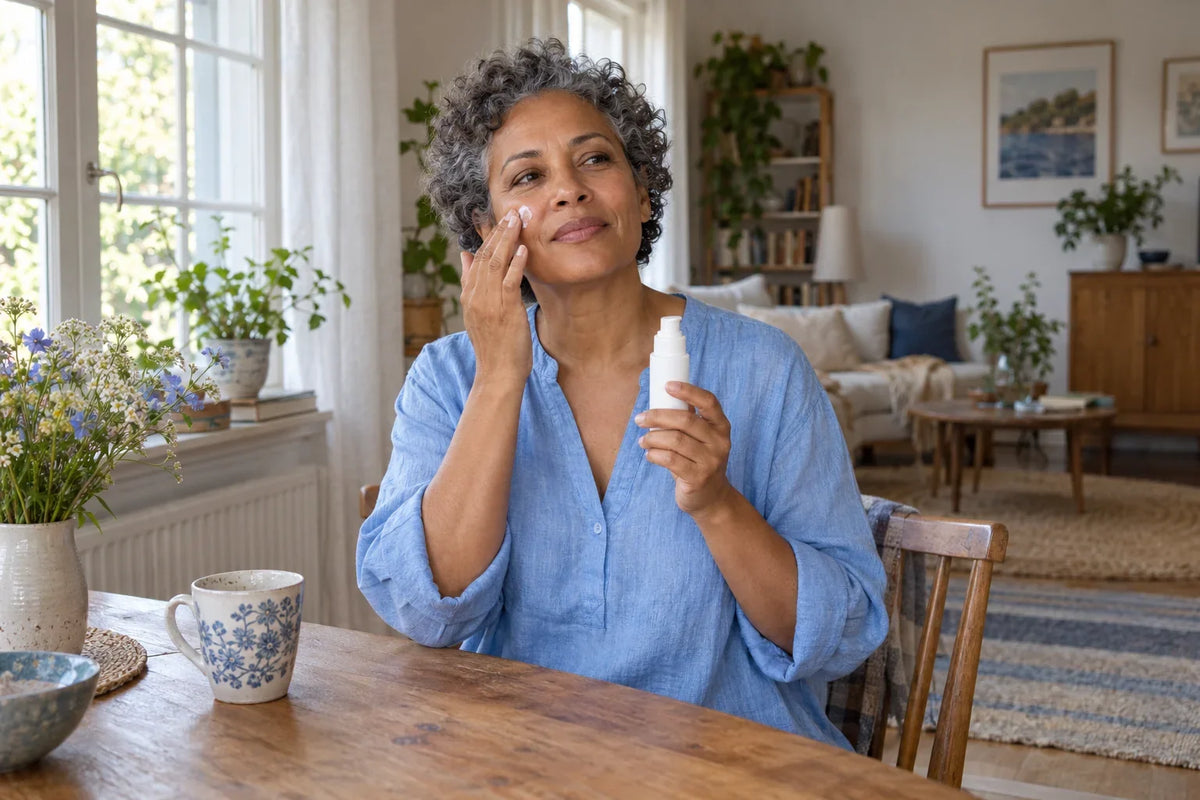
Helping to prevent dark spots on your face starts with gentle skincare and sun protection: seek shade, wear a hat and apply enough sunscreen with SPF 30 or higher and UVA/UVB protection. For melasma, tinted sunscreen containing iron oxides can also help protect against visible sunlight. But pigmentation has several causes. Sunscreen cannot guarantee that existing spots will disappear or that new ones will never develop.
For the differences between colour, shadows and puffiness, see our guide to dark circles under the eyes.
What causes dark spots?
A dark patch alone does not tell you why it appeared. After a pimple, eczema flare or small wound, the skin can leave extra pigment behind. This is called post-inflammatory hyperpigmentation: discolouration after inflammation or injury. Irritating skincare can also trigger it, particularly in skin that readily develops dark marks.
Melasma is a different condition. Darker patches appear when pigment-producing cells become more active. Sunlight and hormonal changes, such as those during pregnancy, can play a part. Some medicines can also be associated with discolouration. Do not change or stop medication yourself; discuss any suspicion with the doctor who prescribed it.
The useful question is therefore not just which SPF to buy, but what happened before the spot appeared. Recurring inflammation calls for a different approach from melasma. You cannot reliably identify the cause from a photograph or the colour alone.
Start with skincare your skin tolerates
If acne or eczema keeps leaving new marks, the underlying skin condition needs attention. Applying more sunscreen does not resolve the inflammation. A doctor or dermatologist can help if symptoms persist or you are unsure which skincare to use.
Choose gentle products that agree with your skin. Burning or stinging does not show that a cosmetic is working particularly well; it may mean irritation. The American Academy of Dermatology recommends gentle, fragrance-free skincare for melasma. If you use a prescribed treatment, discuss irritation with your clinician rather than adjusting the treatment yourself.
For your bathroom shelf, that means a manageable routine is more useful than continually adding another product. Sun protection belongs in that routine, alongside care for any ongoing skin condition. There is no fixed deadline by which every spot will fade.
Sun protection goes beyond sunscreen
A wide-brimmed hat and a place in the shade are practical additions for your face. Think of lunch on a terrace or a walk with little shade: where you sit and the route you take are part of your protection. Clothing, shade and sunscreen work together. Apply sunscreen to skin that remains uncovered; wearing a hat does not mean you can skip the rest.

Good sun protection helps reduce the risk of skin cancer, sunburn and premature skin ageing. For pigmentation concerns, it also helps limit the effects of sunlight. Sunscreen is useful even if you are not trying to tan or rarely burn visibly. A darker skin tone does not make sun protection unnecessary.
For the general principles, see why sunscreen matters for your face. Here, the focus is on dark spots; a protection routine does not replace diagnosis or treatment.
What does tinted sunscreen do?
For melasma, visible light from the sun deserves attention as well as UVA and UVB. The American Academy of Dermatology explains that visible light can worsen melasma, especially in darker skin tones. It recommends tinted sunscreen with iron oxides alongside the usual requirements for UV protection.

That advice concerns a type of product and a particular skin condition. It does not mean that everyone with a brown spot has melasma, or that every tinted cream offers the same protection. Check whether the product contains iron oxides and also provides SPF 30 or higher and broad-spectrum UVA/UVB protection. If you are unsure which product is suitable, discuss it with a dermatologist.
A cream's colour, an attractive photograph or the word ‘tinted’ does not by itself establish protection against visible light. The photograph above simply shows a beige cream texture, not a tested formula or treatment result. A higher SPF does not automatically tell you what a product does against visible light either.
Choose a shade and texture you are comfortable using in the amount required. For more on the visible finish, see the separate guide to sunscreen for darker skin and white cast.
How to read the label
Start with protection: SPF 30 or higher and UVA/UVB coverage. Then look for directions suited to your day. The dermatology association also recommends water resistance. This matters especially when swimming or sweating, together with reapplication; water-resistant does not mean that one layer protects you all day.

What your skin tolerates also guides the choice. If your skin is prone to breakouts, a label stating that the product does not clog pores may help you narrow down your options. It is a selection aid, not a guarantee that you will never develop acne or irritation.
Use the packaging for specific information: protection level, UV coverage, ingredients and application instructions. A name promising an even complexion does not answer those questions.
A routine for mornings and time outdoors
Apply sunscreen before going outside, to all uncovered skin. The American Academy of Dermatology recommends doing so around 15 minutes beforehand. Work through your face, neck and ears deliberately. Do not apply it only to existing spots: the surrounding skin needs protection too.

A few dots to conceal a mark do not replace a full layer. For practical application and quantity guidance, see sunscreen for your face, neck and ears. Follow your product's directions as well.
When outdoors, reapply around every two hours, and after swimming or sweating. Plan for it: take the product with you and choose a quiet moment to apply it thoroughly. For a long afternoon outside, the morning layer alone is not a complete plan.

Your skin can be exposed to UV outdoors even on a cloudy day. For melasma, the dermatology association recommends daily sun protection. You do not need to wait for a beach day to start a routine. Shade and a hat still matter when you reapply; more cream is not a reason to stay in the sun longer.
Makeup is an option, not an obligation
Covering an uneven complexion is a personal choice. You do not have to make spots invisible to care for your skin properly. If you want to wear makeup, think of concealing the colour as separate from sun protection and any treatment.

The AAD mentions makeup as an option if melasma bothers you. It does not promise that makeup treats the cause. A thin layer of makeup with SPF does not automatically replace enough sunscreen either. Think ahead about when you will reapply outdoors. The guide to reapplying sunscreen over makeup helps you consider the practical options.
Today's plan, and when to seek help
Set out your sunscreen, take your hat and think about where you can find shade. Put the product you actually use in your bag. That makes the next application a practical step rather than a good intention. Combine it with skincare that keeps your skin comfortable.

When should you have a spot checked?
Have a doctor assess a new spot, a spot that changes, grows, itches or bleeds, or a sore that does not heal. This also applies to darker skin tones. Do not automatically assume every brown patch is harmless pigmentation. Persistent pigmentation concerns or uncertainty about the cause can also make personal advice useful.
Soluveli is developing facial sunscreen. This does not establish a tinted formula containing iron oxides or effectiveness against dark spots. On the homepage with our ambitions and launch list, you can follow the development and sign up for one message when Soluveli launches. There is no confirmed launch date yet.
Sources and context
5 sources
- American Academy of Dermatology — How to fade dark spots in darker skin tonesPatient information about the causes of dark spots, irritation and addressing the underlying cause. Treatment timelines and US-specific product advice are not presented here as universal promises.
- American Academy of Dermatology — Melasma: Self-careMelasma self-care guidance covering sun protection, gentle skincare and tinted sunscreen with iron oxides for visible light. This does not establish the effectiveness of a Soluveli formula.
- American Academy of Dermatology — How do I know if I’m using the right sunscreen?Supports choosing SPF 30 or higher, UVA/UVB protection and water resistance; the choice also depends on your skin and how you use the product.
- American Academy of Dermatology — How to apply sunscreenPractical guidance on applying sunscreen before going outdoors, using enough and reapplying outside. General quantity examples are not individual measurements for every face.
- American Academy of Dermatology — Finding skin cancer in darker skin tonesDescribes warning signs and skin checks in darker skin tones. A new or changing spot needs assessment; this article does not diagnose it.