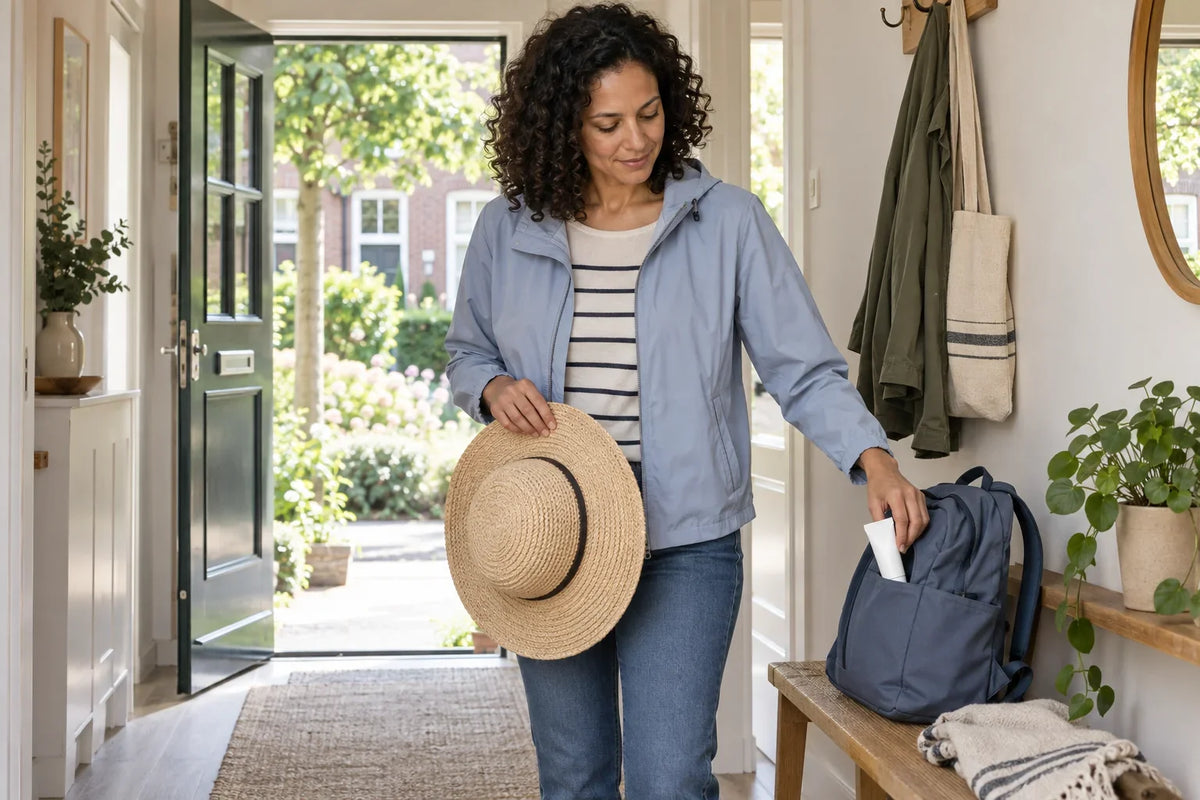
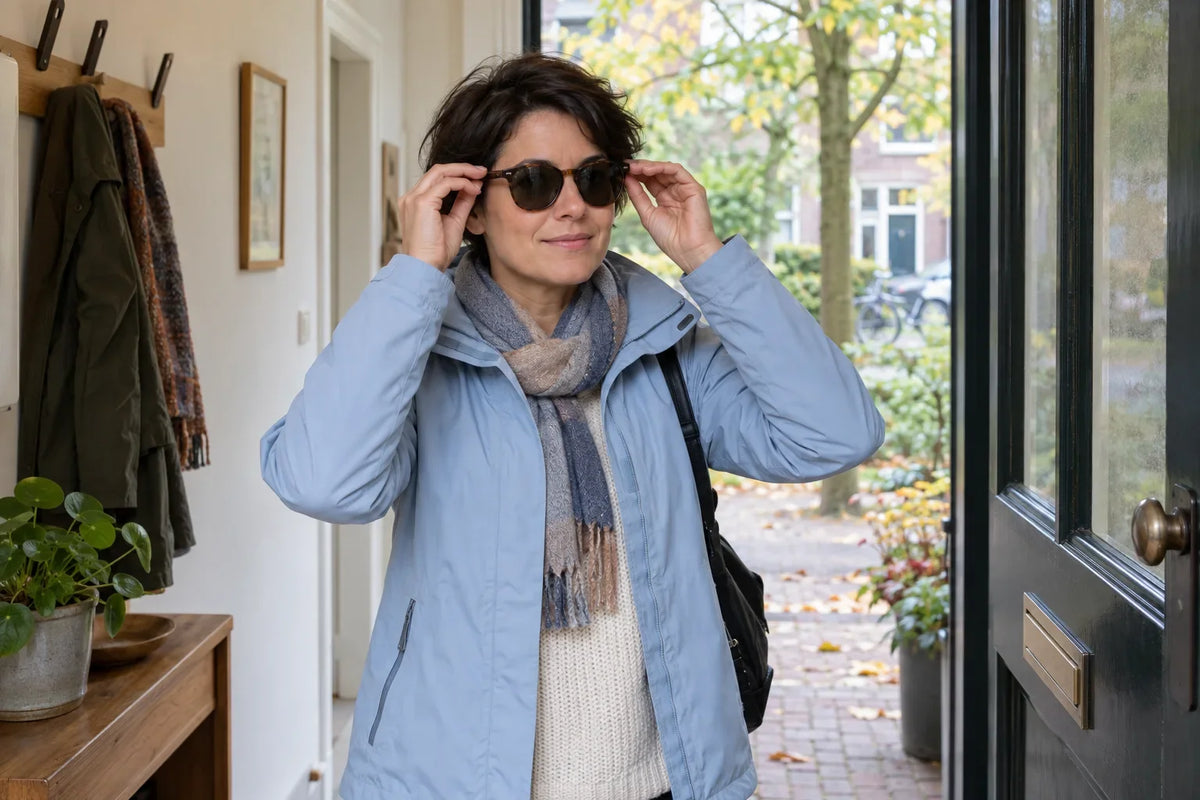
Glass can still let UVA radiation reach your skin. Even so, you usually do not need to apply sunscreen specifically for an ordinary day indoors. Do you spend a long time in direct sunlight by a window, or take long car journeys? It makes sense to consider which parts of your skin remain uncovered and what protection you can easily add. The glass, your position and the length of exposure all matter.
What does a window block?
Glass is not a complete UV barrier. Ordinary window glass blocks much of the UVB radiation, while some UVA can pass through. UVB plays a major part in sunburn; UVA contributes to skin ageing, among other effects. Both can contribute to skin cancer. Not getting sunburnt behind glass therefore does not automatically mean there is no UV exposure.
The amount of UVA passing through depends on the type and construction of the glass. A single percentage for “car windows” or “double glazing” cannot describe your particular situation. A window can offer protection without blocking every UV ray. You do not need to measure this yourself at home to make a sensible choice: start by considering whether you spend long periods in direct sunlight.
For the basics of UVA, UVB and everyday use, read our guide to sunscreen for your face.
Working beside a window
Do you mainly work indoors, without direct sunlight falling on your skin? Cancer Council says sunscreen is generally unnecessary indoors. A bright room alone is not a reason to keep reapplying all day. The relevant distinction is prolonged direct sunlight on your skin, rather than simply having a window nearby.
If your desk leaves your face or forearms in the sun for much of the afternoon, try changing your position first. Move your chair out of the sunlight, or use a curtain or blind to reduce direct sun. Covering clothing can help too. Sunscreen on uncovered skin is an additional option when exposure continues.

There is no fixed distance from a window that is safe in every room, with every type of glass and position of the sun. A desk you have moved may be in sunlight again later. Check your workspace at the time you actually use it. There is no need to turn this into a measuring exercise: moving a chair out of direct sun is often a useful first step.

What about car journeys?
A windscreen and a side window may offer different protection. Laminated glass, often used for windscreens, generally blocks more UVA than the toughened glass used in many side windows. That is not a guarantee for every car. Check your vehicle's glazing information if you want to know exactly what UV protection it provides.
A short journey is different from driving for work or spending hours beside a sunlit side window. For prolonged exposure in a vehicle, Cancer Council recommends measures including covering clothing, sunglasses and SPF 50+ on uncovered skin. Remember the side of your face, your neck and your arms. Keep windows closed if you are relying on the glass for protection; an open window removes that barrier.
Prepare your protection before setting off. Keep supplies accessible for a planned stop, and do not apply sunscreen while driving. Think about what happens after the journey too: getting out for a walk calls for a separate decision about outdoor protection.

Include time spent outside
Your day rarely consists entirely of sitting at a desk or in a car. Walking to work, eating lunch outdoors and shopping on the way home also contribute to your exposure. The UV index helps you plan those outdoor moments. The Dutch public health institute RIVM advises protection from UV index 3; check the forecast for your location.
The outdoor UV forecast does not tell you how much UVA passes through your particular window and reaches your skin. Use it to plan outdoor protection alongside what you know about where you sit. Our guide to the UV index and sunscreen helps turn the forecast into choices about clothing, shade and sunscreen.


Apply sunscreen carefully when you need it
For outdoor use, choose at least SPF 30 with good UVA protection. For long car journeys, you can follow the SPF 50+ advice above. SPF alone does not tell the whole story about UVA protection: look for information about that on the packaging as well. Follow your product's directions.
Apply enough to every uncovered area that needs protection. Ears, the sides of the neck and the hairline are easy to miss. If you are unsure about the amount, see our advice on sunscreen for the face, neck and ears.

During outdoor exposure, the usual advice is to reapply roughly every two hours, and after swimming or sweating. That does not mean automatically reapplying every two hours on an ordinary day indoors. If you will be exercising or sweating heavily later, read what water resistance and sweat resistance mean in practice.

At Soluveli, we are developing facial sunscreen intended to fit comfortably into everyday life. Our product is still in development. Read what we are working towards or stay informed about the launch.
Frequently asked questions
Do I need sunscreen if I stay home all day?
Usually not specifically because you are indoors. Prolonged direct sunlight by a window and any time spent outside may change that. Consider your actual day, rather than just the label “working from home”.
Does a closed car window offer complete protection?
You cannot assume that for every window. UVA protection varies. During prolonged exposure, clothing and sunscreen on uncovered skin remain useful additions.
Does the same advice apply if I am sensitive to light?
A condition or medicine that makes your skin more sensitive to light may require individual advice. Discuss protection behind glass with your doctor or pharmacist and follow the information supplied with your medicine. General advice for an ordinary indoor day does not replace this.
Sources and background
5 sources
- Cancer Council — Should I wear sunscreen when indoors?Explains why sunscreen is usually unnecessary on an ordinary indoor day and why prolonged direct sunlight by a window is different.
- Cancer Council — Tinted windowsDescribes differences between building and vehicle glass and offers advice for prolonged exposure in a vehicle. Australian guidance, not a claim about every window.
- RIVM — Bescherm uzelf: tips bij zonkracht 3 of hogerDutch guidance for UV index 3 or above, including clothing, shade and SPF 30 or higher with good UVA protection.
- American Academy of Dermatology — How to apply sunscreenGeneral guidance on broad-spectrum protection, sufficient application and reapplication during outdoor exposure.
- World Health Organization — Radiation: The ultraviolet (UV) indexExplains the UV index as a measure of potential harm from outdoor UV radiation; it does not measure exposure at a particular desk.